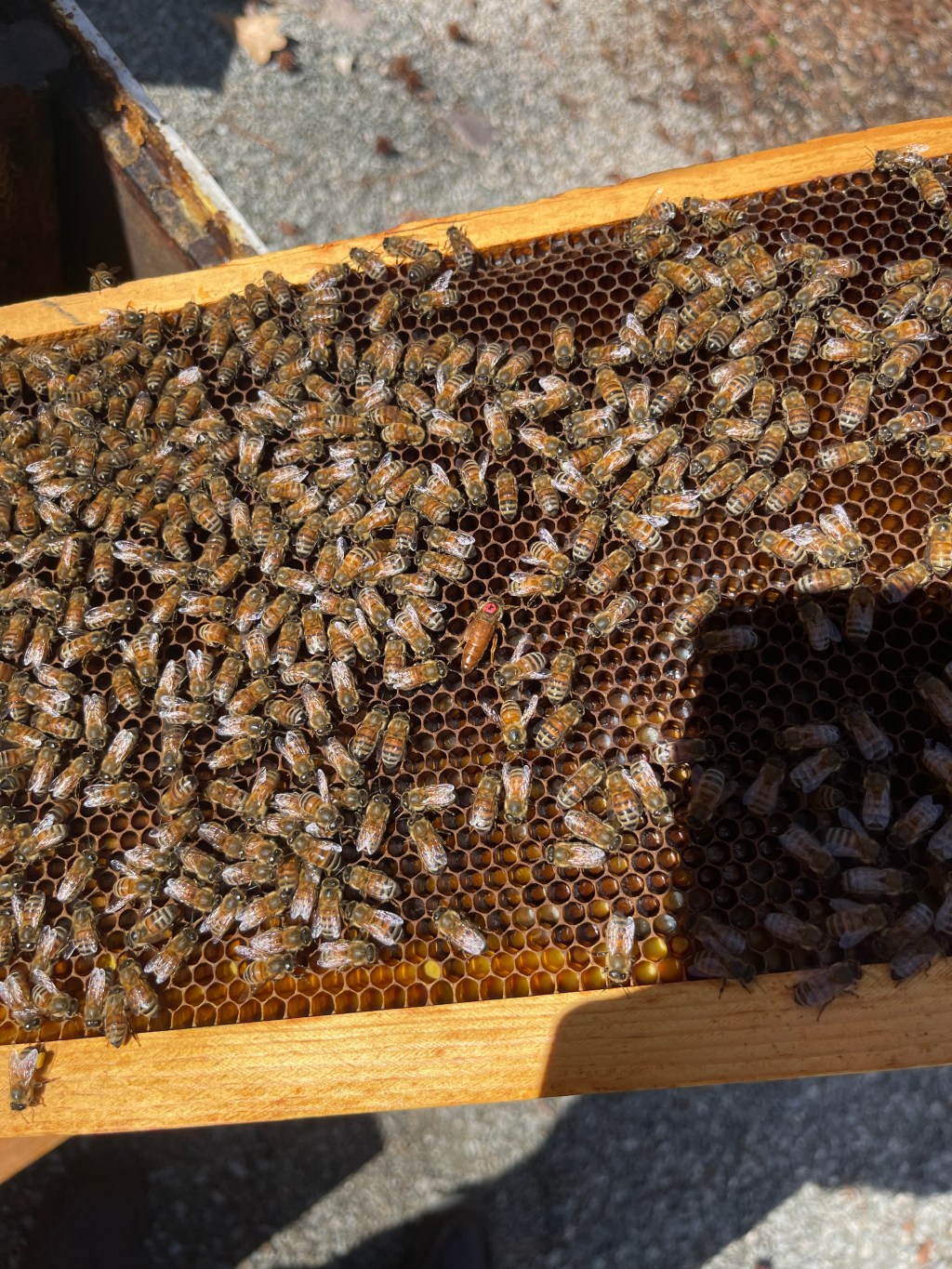
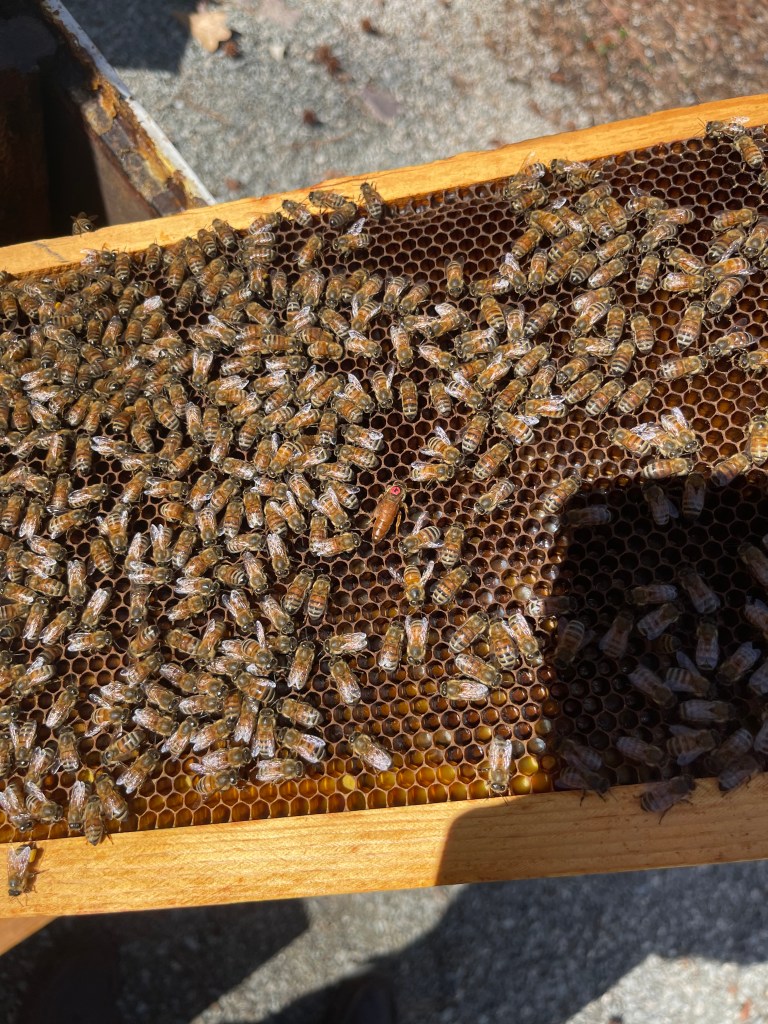
This year I took the plunge and attempted to raise some queens by grafting. After a considerable amount of effort and large number of mistakes, I think I have four viable cells out of ten grafts. Not bad for a first attempt and maybe the next take will improve. They still need to emerge, get mated and hopefully return without becoming a dragonfly snack. This may be my first time grafting but certainly not my first time raising queens. Every beekeeper at some point becomes a queen breeder. There are two types of queen breeders – intentional and unintentional. I’d go into a colony and during an inspection find queen cells. It didn’t matter that it was a swarm cell, supercedure cell or emergency cell. There was a queen being raised and I didn’t plan for it – it was unintentional.
Many times, this left me in emergency mode. Scrambling to get a nuc box, frames, etc. ready for a quick split. Now I try to retain a bit more control over the situation and make queen raising an intentional event. I’m prepared to deal with queen cells. In the very least, I’m not in so much of a panic mode.
There are so many reasons to raise a queen. Making an increase in colonies, replace a failing queen, go into winter with a young queen, rolled her on the last inspection (ouch!) The fact of the matter is that our queens will not live forever and it’s up to us to keep our colonies thriving. And that starts with a quality queen. Now I’ll admit I’ve purchased mated queens and there are times when it’s necessary to purchase a queen. But maybe by more intentional queen rearing we can avoid buying queens to a large extent and become more self sustainable.
Just as there are many reasons to raise queens, there are many methods that you can use to raise one. I’ve had success with a few. First, and probably the easiest is the OTS or On The Spot method by Mel Disselkoen. Take or make a queenless hive, then find a frame with eggs on it, and take your hive tool and rake down the bottom 1/3rd of a few cells to create a vertical cell. Another option is the Miller method invented by CC Miller. This involves cutting the comb in V-shaped sections to get cells vertical so the bees make queen cells on the bottoms of the “V”. A third option is simply make a split by removing the queen and some resources to a new hive and as long as there is a frame of eggs/larvae remaining the bees will raise a queen. All of the methods above are ways to get a local quality queen.
I encourage each of you to learn about queen rearing. Do some research into the various methods available. Learn the queen life cycle and queen rearing timeline. And finally become a little familiar with some of the pioneers in queen rearing. Even if you don’t want to intentionally raise queens I guarantee it will make you a better beekeeper. You will understand the process of queen rearing and what your bees need and are doing to make queens -whether you intended it or not!
Happy and Safe Beekeeping,
John K., Journeyman Beekeeper and CCBA Director
 Cumberland County Beekeepers Association
Leave a comment